
There Is a Biological Reason Diets Fail — And It Has Nothing to Do With You
The number that metabolic researchers find most striking isn't how much weight people lose on diets. It's how precisely they regain it. Study after study shows that within three to five years, the vast majority of people return to within a few pounds of their starting weight — regardless of how carefully they adhered to the program, regardless of how significant the initial loss was. This isn't randomness. It's a predictable biological response to a specific type of intervention.
The response is driven by a hormonal mechanism most diet programs never address. When caloric restriction causes weight loss, the body interprets this not as a health goal being achieved, but as a threat. It responds by increasing ghrelin — the hormone that creates hunger urgency — while simultaneously decreasing leptin, the hormone that signals satiety. Metabolic rate drops below what the reduced body mass would predict. The system is designed to restore the lost weight, and over months and years, it succeeds.
This is the metabolic gap: the space between what conventional dieting can achieve and what sustained weight loss actually requires. It isn't bridged by trying harder. It's bridged by addressing the hormonal environment that governs the system.
How GLP-1 Closes the Gap
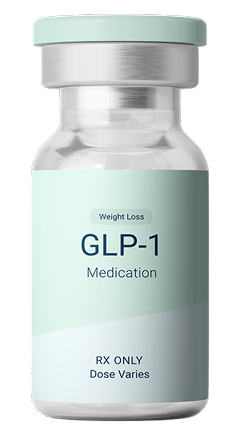
GLP-1 — glucagon-like peptide-1 — is the hormone your small intestine releases after a meal to signal the hypothalamus: the body has received what it needs. This signal serves multiple functions simultaneously: it slows gastric emptying, reducing the rate at which nutrients enter the bloodstream; it stimulates insulin release in proportion to blood glucose; and crucially, it tells the brain that the meal is complete.
In people with intact GLP-1 function, this signal produces a clear, reliable sense of satiation. In people who have struggled with weight for years — particularly those who have experienced repeated cycles of loss and regain — GLP-1 signaling is frequently blunted. The signal either doesn't arrive with sufficient strength or is received less effectively by the hypothalamus. The brain doesn't register fullness at the appropriate point. Hunger persists past the caloric need. And the metabolic gap remains open.
"We're not talking about appetite suppression in any crude sense. GLP-1 receptor activation restores a signaling pathway. For patients who have been missing that signal, the experience is less like being forced not to eat and more like finally feeling normal around food for the first time in years."
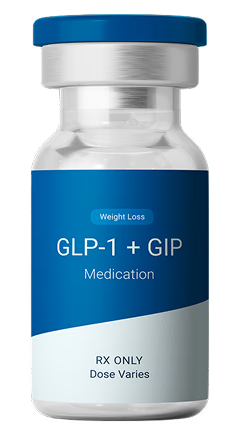
GIP — glucose-dependent insulinotropic polypeptide — acts alongside GLP-1 but through a distinct mechanism, operating more directly on adipose tissue metabolism and energy expenditure. Combined GLP-1+GIP protocols engage both pathways simultaneously. Clinical trials of dual-pathway protocols have consistently shown outcomes 30–40% higher than single-pathway GLP-1 approaches, which is why they have attracted significant research attention since 2021.

The difference between supervised and unsupervised GLP-1 access comes down to titration, individual assessment, and ongoing monitoring — the three variables that account for most of the outcome variance in clinical data.
A meta-analysis of 14 supervised GLP-1 trials found average total body weight reduction of 14.8% at 12 months among supervised participants, compared to 4.3% in standard dietary control groups. At 24 months, 71% of supervised participants maintained clinically meaningful weight loss. The authors identified individual assessment, proper titration, and continuous clinical monitoring as the primary outcome predictors.
The Same Medication, Very Different Results
The gap between good and poor outcomes in GLP-1 programs is not primarily about the medication. It's about what surrounds the medication. The same compound, administered without individual assessment, without proper titration, and without ongoing clinical monitoring, produces results that are materially inferior to those reported in the clinical literature. This discrepancy is what drives most patient skepticism about the approach — people try it informally and conclude it doesn't work, when in reality the delivery was inadequate.
Proper clinical supervision of a GLP-1 protocol involves five distinct components that change outcomes at every stage of the program:

"I tell patients that GLP-1 programs are not magic — but they are the first tool we've had that addresses the actual mechanism of weight regain rather than just working against it. The supervision element isn't optional. In the data, it's the variable that explains most of the outcome variance."
GLP-1 and GLP-1+GIP — Clinical Distinctions
TrimRx provides supervised access to two distinct protocol pathways. Understanding the clinical difference between them before your intake appointment gives you a more informed starting point for the conversation with your clinical team.
| Feature | GLP-1 Protocol | GLP-1 + GIP Protocol |
|---|---|---|
| Mechanism | GLP-1 receptor activation | Dual GLP-1 + GIP receptor activation |
| Clinical Supervision | ✓ Full | ✓ Full |
| Individual Assessment | ✓ Included | ✓ Included |
| Trial Avg. Outcomes | ~15% body weight reduction | ~20% body weight reduction |
| Ongoing Monitoring | ✓ Yes | ✓ Yes |
| Prescription Required | ✓ Rx Only | ✓ Rx Only |

Which protocol is appropriate is determined at intake — based on your metabolic picture, health history, and what previous weight management efforts have and haven't achieved.
What Patients Describe From the Program
"Three years of medical weight management visits that produced nothing durable. TrimRx in six months produced more than all of it combined — and the approach felt fundamentally different. They actually adjusted my protocol twice based on how I was responding."
"I kept waiting for the hunger to come roaring back the way it does on every other program. It didn't. Month four and I'm still eating less than I ever have — not because I'm being disciplined about it, but because I'm actually satisfied."
"The intake assessment was the first time a weight management program felt like actual medical care. They looked at my history, asked the right questions, and started me on a lower dose than standard because of something they found. That level of attention changed everything."
"My wife and I both started at the same time on different protocols. We're in month seven. She's down 33 pounds on GLP-1+GIP, I'm down 21 on GLP-1. What we both keep saying: the mental relationship with food changed before the scale did."
Individual results vary. Testimonials reflect personal experiences and are not guarantees of identical outcomes.
Closing the Metabolic Gap — What the Evidence Supports
The research is clear enough at this point that it has meaningfully changed clinical practice. Supervised GLP-1 programs produce outcomes that conventional dietary approaches cannot replicate — not because people try harder, but because they address the hormonal environment that governs whether weight loss is temporary or sustained.
The key word is supervised. The outcomes that have shifted the medical community's view of weight management come from programs where patients received individual assessment, proper titration, and ongoing clinical monitoring. That combination — not just the medication — is what closes the metabolic gap. TrimRx is the program in our review that delivers all five components of proper clinical supervision through an accessible, non-specialist pathway.
VitalAxis earns affiliate commissions when readers access TrimRx services through links on this page. This financial relationship does not influence our editorial content, the clinical research we cite, or the assessment criteria we apply. We cover TrimRx because it meets the supervised clinical standard the evidence describes — not because of the commission structure.
Editorial Disclosure: This article is published by VitalAxis, an independent editorial website. This page contains affiliate links. If you access TrimRx services through our links, we may earn a commission at no additional cost to you. Affiliate relationships do not influence our editorial content or the research we reference.
Health Disclaimer: The information in this article is for general informational and educational purposes only. It does not constitute medical advice and is not a substitute for consultation with a qualified physician. Individual results vary significantly. Always consult a licensed healthcare provider before beginning any weight management program, particularly if you have pre-existing conditions, take prescription medications, are pregnant or nursing, or have a history of eating disorders.
Advertising Disclosure: This page contains paid affiliate content. The editorial presentation of TrimRx reflects genuine assessment of its supervised clinical model and a compensation relationship. Readers should weigh both when evaluating this content.
Results Disclaimer: Clinical findings referenced in this article are drawn from peer-reviewed literature for educational context. They do not represent guaranteed individual outcomes. Real-world results vary based on health status, protocol adherence, and clinical management.